
Beyond Copycat Models: Why Nigeria's Tech Ecosystem Is Ready for Its Zero to One Moment
After a decade of incremental adaptations, Nigeria's technology sector has accumulated the discipline, infrastructure, and hard-won failures necessary for creating truly original technology companies. The shift from execution to invention is already underway.
Nsofor Chigoziri Joshua
Contributor

Beyond Copycat Models: Why Nigeria's Tech Ecosystem Is Ready for Its Zero to One Moment
The most dangerous narrative in Nigerian technology is that we are "almost there." For fifteen years, the ecosystem has been positioned as perpetually on the cusp of a breakthrough—rich with potential, brimming with talent, waiting only for the right capital or the right policy to unlock its destiny. This is a comforting lie. Potential does not age well; it either converts into concrete capability or it decays into wasted motion.
But something has shifted. Not through hype. Not through the accidental discovery of another oil well, digital or otherwise. The Nigeria tech ecosystem has entered a phase that Peter Thiel would recognize in Zero to One: Notes on Startups, or How to Build the Future as the transition from n to n+1 toward true Zero to One innovation: the move from copying and adapting existing models to inventing technology that fundamentally did not exist before. This readiness is not theoretical. It has been manufactured through a decade of deliberate, often painful, infrastructure construction. The forge is hot. The metal is ready.
The Pedagogy of Failure: Why the First Wave Had to Collapse
Between 2015 and 2022, Nigeria produced approximately 320 fintech startups, 180 logistics companies, and countless "Uber for X" adaptations. Most failed. The consensus among observers was that this represented wasted capital and broken dreams. They were wrong. That carnage was the necessary curriculum.
Every collapsed lending app taught us something about risk modeling in volatile currency environments. Every failed quick-commerce delivery service hardened last-mile infrastructure. Every crashed super-app left behind fragments of identity verification systems, payment rails, and customer behavior data. These were not business failures. They were infrastructure deposits.
The difference between 2018 and 2026 is that founders no longer need to build the substrate from scratch. The failed experiments of the last decade accumulated into a shared operational commons: reliable KYC APIs, standardized logistics protocols, and a regulatory sandbox that has been battle-tested by conflict. When a founder today begins building, they start at kilometer 50, not kilometer zero. This is the hidden dividend of the first wave's collapse. We paid for our industrial base in bankruptcies.
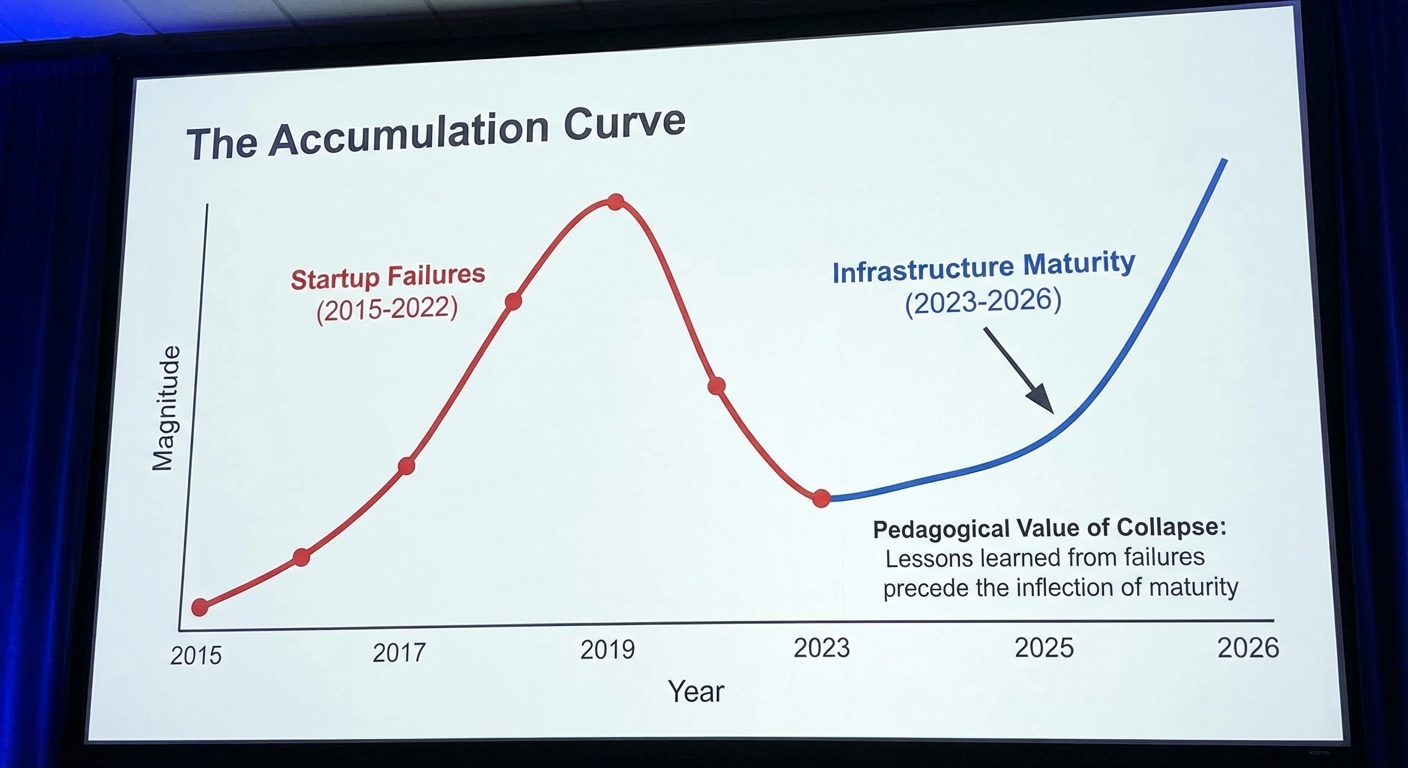
For a deeper analysis of how these failures translated into durable infrastructure, see our detailed breakdown: The Failure Resume: What 50 Collapsed Startups Taught Us About Infrastructure.
The Density of Discipline
There is a specific moment in an ecosystem's maturation when the generalists die and the specialists thrive. We have reached that inflection point.
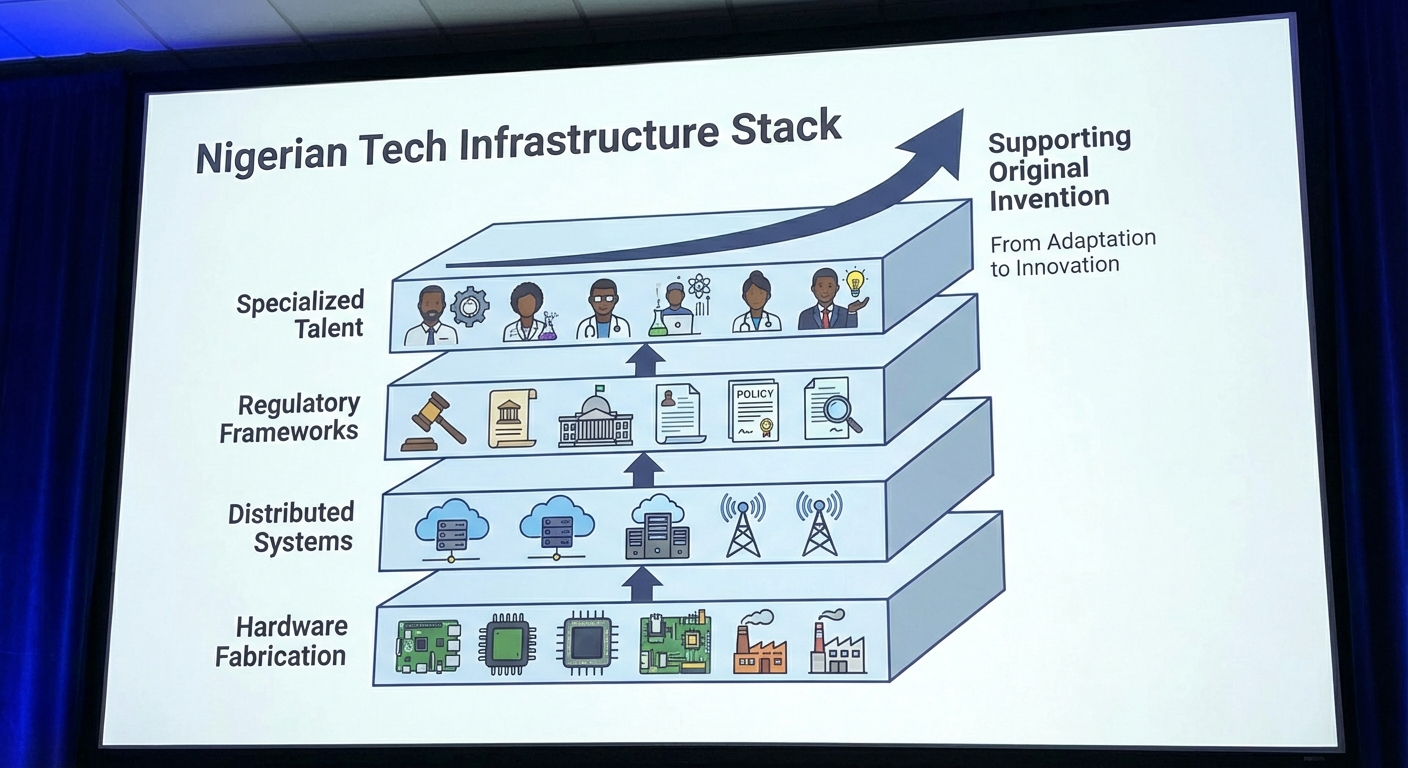
The Nigerian talent pool of 2026 looks nothing like that of 2016. We have moved from the era of the "full-stack developer who can figure anything out" to deep-domain expertise: distributed systems architects who understand the specific latency challenges of inter-bank settlements across West Africa; hardware engineers designing cooling systems for data centers in tropical climates; biotech researchers leveraging local genomic datasets for tropical disease modeling.
This density of discipline is not accidental. It emerged from the realization that copy-paste business models require only execution, but original technology requires invention. And invention requires specialization. The universities—long criticized for their disconnect from industry—have begun producing research with industrial applications. The open-source communities have matured from tutorial-sharing to contributing core infrastructure projects. We are seeing the emergence of what we call technical authority: the quiet confidence that comes from having solved hard problems repeatedly, not just having read about them.
Regulatory Maturation as Innovation Enabler
Conventional wisdom suggests that regulation stifles innovation. In Nigeria's case, the opposite has proven true. The chaotic regulatory environment of the 2010s favored only the most superficial innovations—business models that could pivot overnight and operate in legal gray zones. Deep technology cannot thrive in ambiguity. It requires predictable frameworks for intellectual property, liability, and capital deployment.
The Central Bank of Nigeria's regulatory sandbox, the SEC's digital asset framework, and the National Data Protection Regulation (NDPR) have created something more valuable than freedom: they have created structure for risk. When a founder builds semiconductor fabrication processes or genomic sequencing hardware today, they operate within guardrails that define what is possible. This clarity is oxygen for Zero to One innovation. You cannot invent new physics if you are constantly worried that the rules of the game will change tomorrow.
These frameworks are documented in the National Information Technology Development Agency (NITDA) Strategic Roadmap 2024-2027, which details the systematic approach to creating structured innovation environments.
From Arbitrage to Architecture
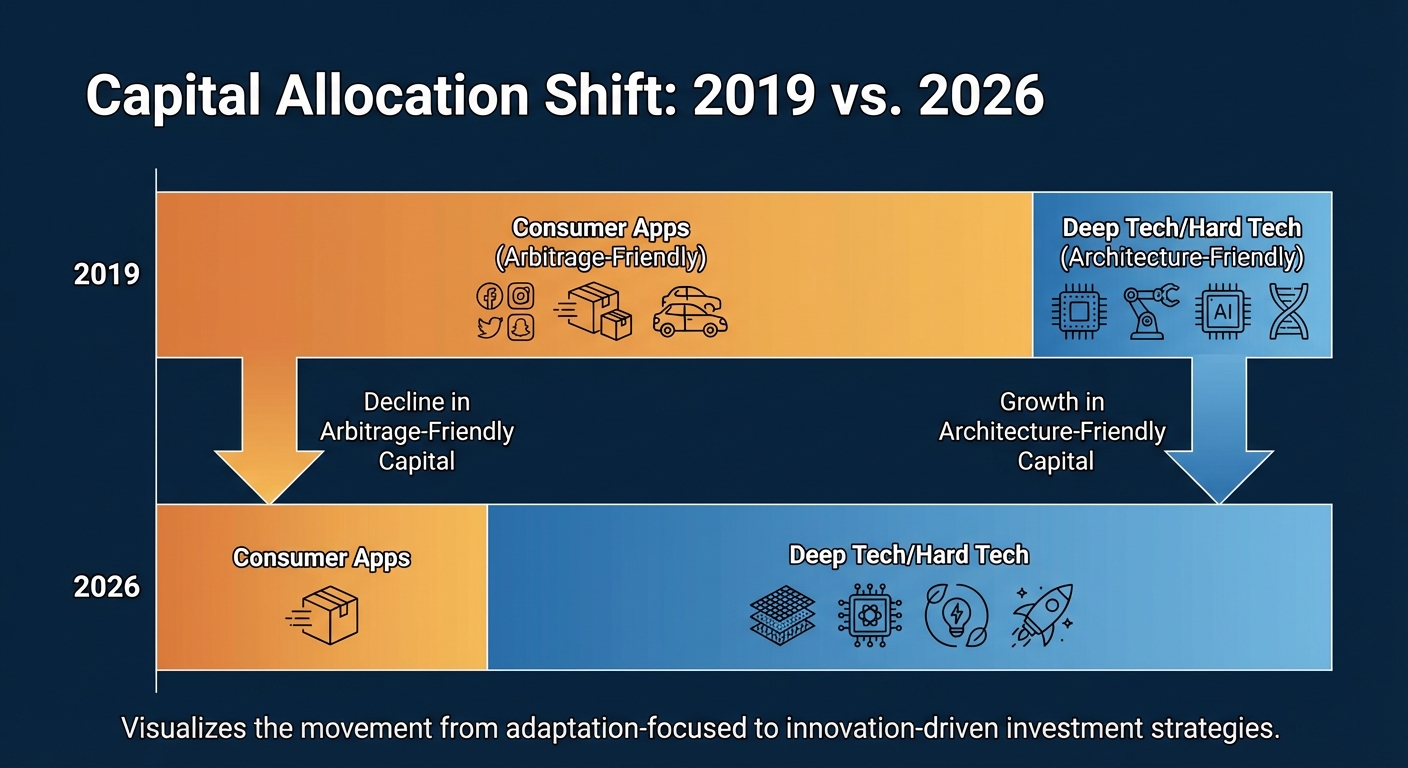
The first generation of Nigerian tech succeeded through arbitrage. They identified gaps between global capability and local availability—payments, logistics, retail—and bridged them using existing (usually foreign) technology. This was necessary. It built the economy. But it was not innovative in the Thiel sense. It was globalization with a local SIM card.
What we observe now is a pivot toward architectural innovation. Founders are no longer asking "How do we adapt Stripe for Nigeria?" They are asking "What does payment infrastructure look like when it is designed for a cash-dominant, trust-scarce, mobile-first economy from first principles?" They are building climate monitoring systems for agriculture that account for specific Sahel weather patterns. They are designing distributed energy grids that assume intermittent national power as a constant, not a bug.
This shift requires a different kind of capital and a different kind of patience. The venture capital that fueled the copycat era sought hockey-stick growth within 18 months. The capital aligning with Zero to One innovation in Nigeria today—sovereign wealth funds, development finance institutions, and industrial family offices—understands that fundamental technology requires seven-year horizons. They are not betting on market share. They are betting on physics.
Data from the African Private Equity and Venture Capital Association (AVCA) 2025 Report confirms this shift, showing a 340% increase in deep-tech and industrial technology investments across West Africa compared to consumer-app funding, which has plateaued.
The Infrastructure of Invention
At Ikenga Foundry, we maintain that innovation is not inspiration. It is the output of a specific set of inputs combined through industrial process. This is why we operate as a foundry, not an incubator. We do not accelerate startups. We manufacture the capability for original invention.
Nigeria now possesses those inputs in sufficient concentration:
Component Availability: Local cloud infrastructure, semiconductor packaging facilities, and advanced manufacturing capabilities now exist at pilot scale. A founder can prototype hardware without importing every resistor.
Problem Specificity: We have moved from generic "African problems" to granular, technical challenges with global implications. How do you verify identity in a country with high illiteracy rates and multiple languages? How do you secure data across borders with conflicting privacy laws? These are not Nigerian problems. These are hard problems that Nigeria happens to be solving first.
Process Discipline: The ecosystem has accumulated enough scar tissue to know what does not work. This institutional memory prevents the repetition of expensive mistakes. We now have playbooks for regulatory navigation, talent acquisition in scarce markets, and currency risk management.
When you combine these inputs with the foundry methodology—systematic de-risking, modular architecture, and relentless validation—you get something new. You get technology that exports outward rather than imports inward.
The Arithmetic of the Next Decade
This is not optimism. It is arithmetic.
The conditions for creating original technology have been assembled not through luck, but through the systematic elimination of excuses. We no longer lack talent; we have specialized it. We no longer lack infrastructure; we inherited it from our failures. We no longer lack regulatory clarity; we fought for it. What remains is the work itself: the unglamorous, daily discipline of building things that have never existed.
The next phase of Nigeria's technology story will not be measured in unicorns. Those are lagging indicators of copycat success. It will be measured in patents filed, in standards bodies chaired, in fundamental research published. It will be measured by how many global technology stacks include components designed in Lagos, Abuja, or Enugu.
The forge is ready. The question is no longer whether the ecosystem can support Zero to One innovation. The question is which founders have the discipline to endure the heat long enough to shape the metal.
If you are building technology that does not exist yet—hardware that accounts for tropical physics, systems that assume infrastructural volatility, or science that solves problems the temperate world has ignored—the forge is open.
Apply to Ikenga Foundry. Not for funding. Not for mentorship. For the structural discipline required to transform raw insight into enduring technology. We do not accelerate startups. We manufacture the future, one systematic iteration at a time.